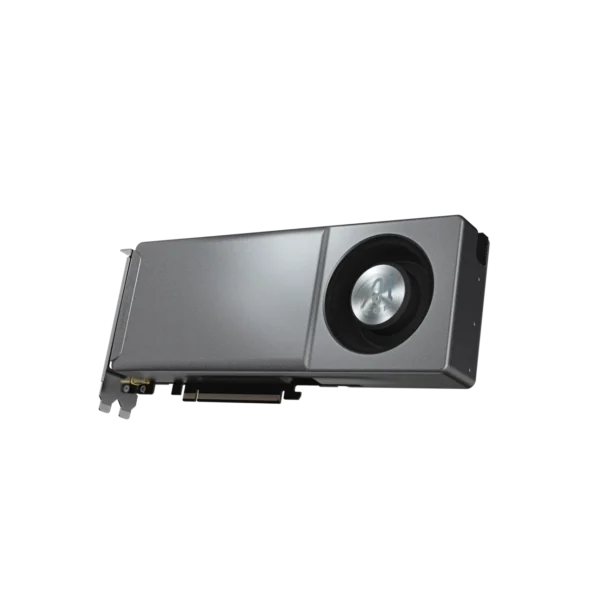
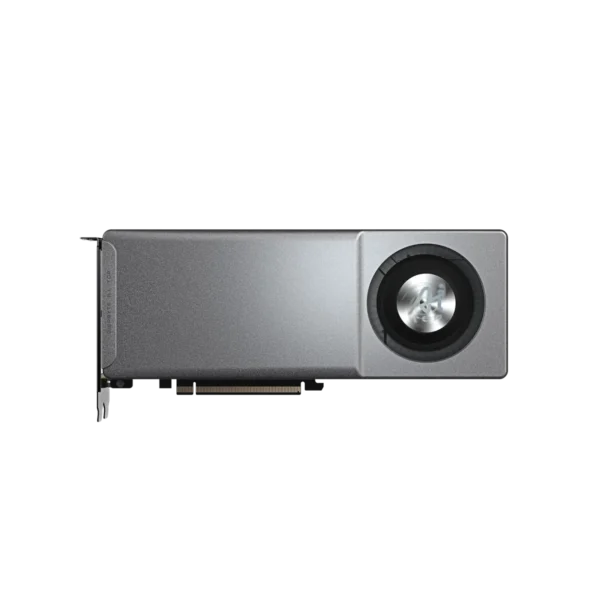
Cooling: Blower-style fan, vapor chamber, rear exhaust for multi-card setups
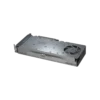
Size: 267 x 111 x 40 mm, dual slot
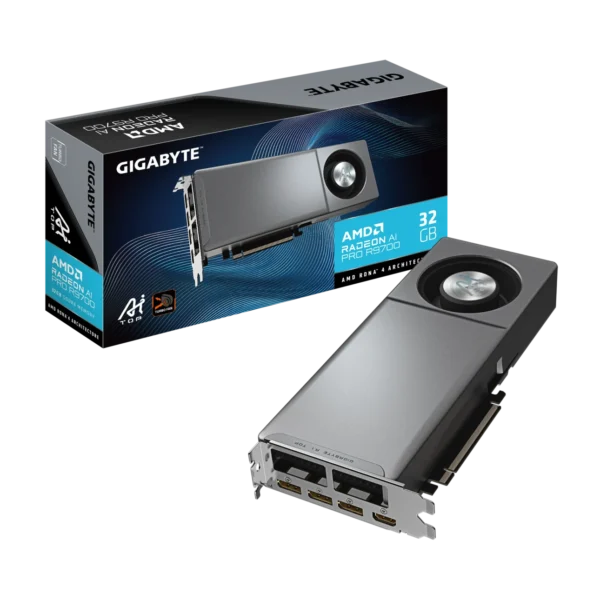
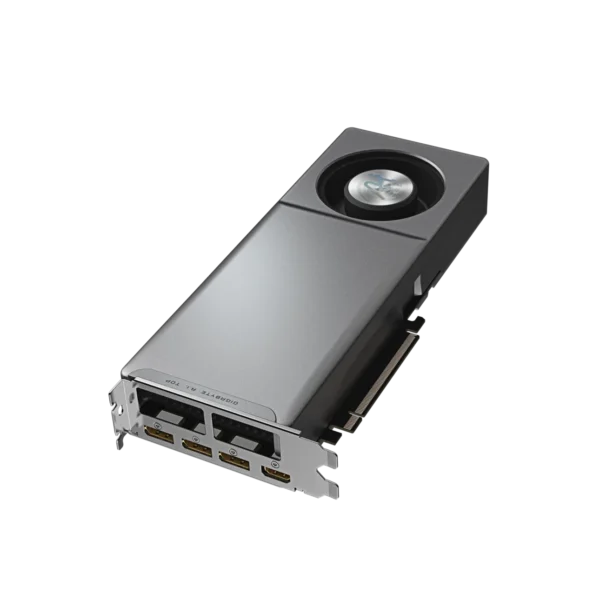
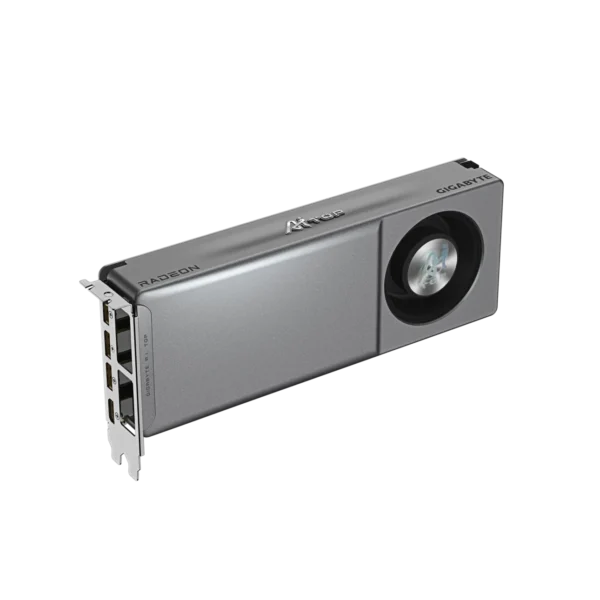
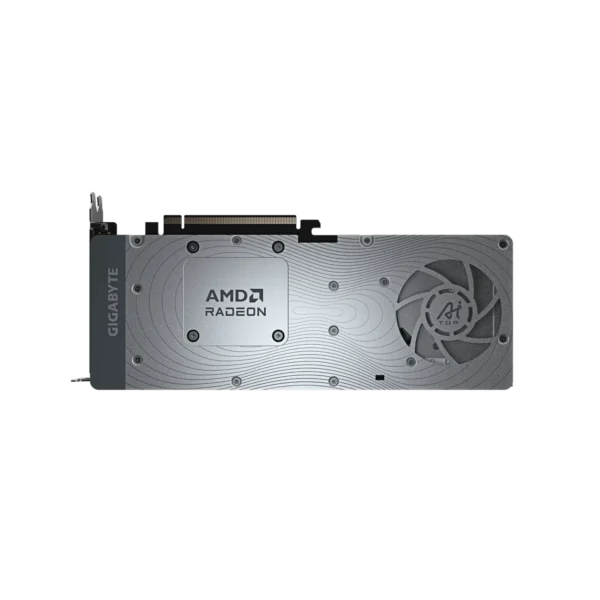
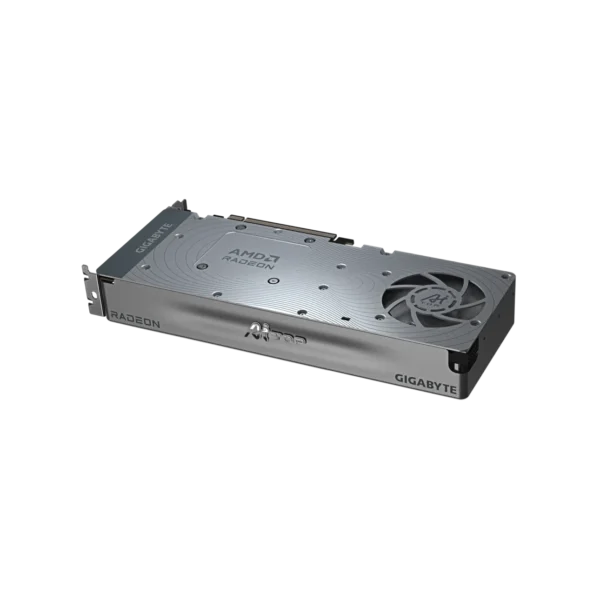
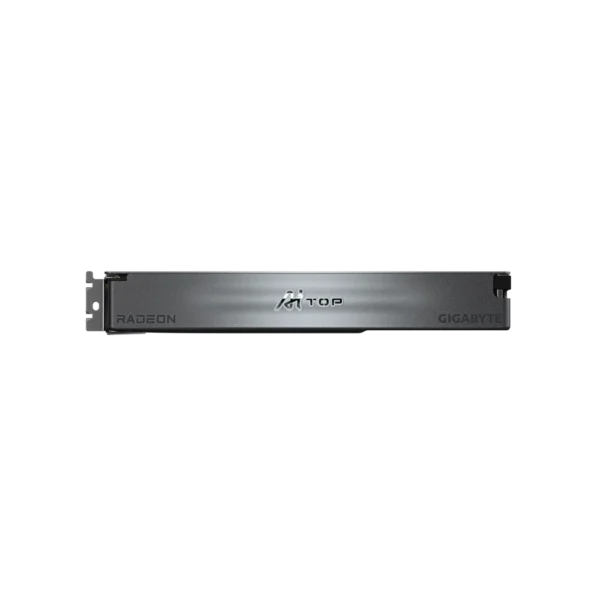
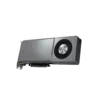
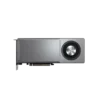
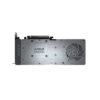
Finish: Silver-gray metal shroud and back plate
Note: No CUDA support; AI frameworks need ROCm
In stock
ℹ️
For walk-in customers: please always INQUIRE FIRST before visiting as not all items are displayed in our physical store. As an online-first store, most of our inventory is held in our online warehouse and is transferred to the store upon request.
GIGABYTE Radeon AI PRO R9700 AI TOP 32GB GDDR6 256-bit Blower Workstation Graphics Card, PCIe 5.0 | GV-R9700AI-TOP-32GD
Price Drop Alerts & Price History
⚠️ That's a steep drop! You might be waiting a while.
We'll notify you the moment the price hits your target.
The GIGABYTE Radeon AI PRO R9700 AI TOP 32G is a workstation card built around AMD’s RDNA 4 Radeon AI PRO R9700 with 32GB of GDDR6. It is aimed at people who run large language models, image generation and other AI work locally, where the amount of video memory decides which models fit at all. GIGABYTE pairs the chip with a dual-slot blower cooler meant for stacking several cards in one workstation.
For Philippine developers, researchers, small studios and AI hobbyists, the appeal is simple: a single card with 32GB of memory on a standard PCIe 5.0 slot, using the same RDNA 4 platform as AMD’s consumer Radeon RX 9000 cards, and a cooler that pushes heat out of the case instead of into it.
Key Features and What They Mean
32GB GDDR6 on a 256-bit bus
The headline spec is memory capacity: 32GB at 640 GB/s. In an independent review of the same R9700 chip on a PowerColor board, Back2Gaming found the R9700 ahead of 16GB cards on a 27B chat model because those cards had to offload part of the model to system memory. The same review found an RTX 5070 Ti faster on a smaller 9B model that fits in 16GB. In our assessment, that is the right way to think about this card: it pays off when the model you want to run needs more than 16GB.
AI compute and ECC on Linux
GIGABYTE lists 128 AI accelerators, 766 TOPS INT8 and 1531 TOPS INT4 peak. AMD supports ECC memory on this GPU under Linux only, which matters for long training or inference runs where silent memory errors are a concern. AMD publishes a ROCm and PyTorch guide for Radeon AI PRO cards. There is no CUDA support, so software built only for NVIDIA GPUs will not run on it without a ROCm path.
Blower cooler built for multi-card setups
Unlike open-air gaming cards, this card uses a single blower-style TURBO fan that pulls air in and exhausts it through the rear bracket. GIGABYTE indents the metal cover so the fan can still breathe when cards sit close together, and uses a vapor chamber, copper heat sink, double ball bearing fan and composite metal grease on the GPU. Puget Systems notes that blower cards like this vent most of their heat out the back but are louder under load than most consumer cards. In the Back2Gaming review of the reference-layout R9700, the blower never stopped, idling at 20% fan speed.
Power: 300W board power, one 16-pin connector
AMD rates the R9700 at 300W total board power and recommends a 750W power supply for one card. Power enters through a single 16-pin (12V-2×6) connector, and GIGABYTE includes an adapter to two PCIe 8-pin cables for power supplies without a native 16-pin lead. Back2Gaming measured the R9700 holding close to its 300W limit through nearly all AI workloads.
Size and outputs
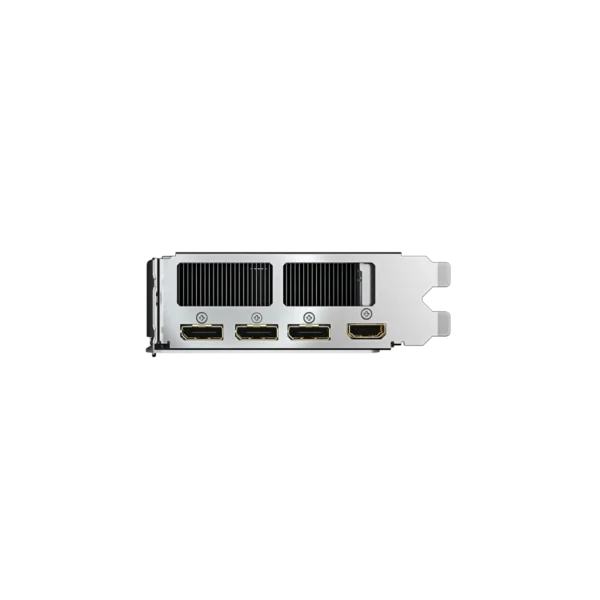
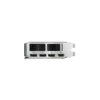
At 267 x 111 x 40 mm and two slots thick, the card fits most mid-tower cases. Outputs are three DisplayPort 2.1a and one HDMI 2.1b, with up to four displays and AV1, HEVC and H.264 encode and decode. Several other R9700 boards use four DisplayPort outputs instead, so the HDMI port here is useful if you drive a TV or an HDMI-only monitor.
Competitive Positioning
This is an enthusiast and professional card for local AI, not a gaming card first. Against 16GB consumer cards such as the Radeon RX 9070 XT or GeForce RTX 5070 Ti, its advantage is double the memory and a cooler designed for workstation stacking; its trade-offs are blower noise and, on smaller models that fit in 16GB, no speed advantage. Back2Gaming measured gaming results nearly identical to an RX 9070 XT, which makes sense since both use 64 RDNA 4 compute units.
Against other Radeon AI PRO R9700 boards, the GIGABYTE AI TOP version stands out for its HDMI 2.1b output, metal frame and back plate, and GIGABYTE’s AI TOP Utility for monitoring fine-tuning jobs. Puget Systems notes that its 32GB matches higher-end NVIDIA workstation cards, but it is not as fast as them and has no CUDA support.
Philippine Buyer Perspective
Our Take
Buy this card for memory, not frame rates. If your work is gaming, streaming or general creative work that fits in 16GB, a consumer RX 9070 XT or RTX 5070 Ti will be quieter and better suited. If you are running 20B to 30B class models locally, building a two to four card inference box, or need ECC under Linux, the 32GB and blower design are exactly what you are paying for.
In a hot Philippine room, the blower layout helps more than it hurts in a multi-card build because each card dumps its heat outside the case instead of preheating the card next to it. The cost is noise: plan to keep this machine away from where you work, or accept a constant fan hum. Check that your software stack supports ROCm on your operating system before you commit.
Known Compatibility and Setup Notes
Required: A power supply with a 16-pin 12V-2×6 lead, or two free PCIe 8-pin cables for the included adapter. AMD recommends at least 750W for one card. In our calculation, two cards already draw about 600W at their 300W board power before the CPU and platform, so a multi-card build needs a much larger, high-quality power supply.
Recommended: A case with clear exhaust space behind the rear bracket, since the blower vents through it. For multi-card builds, a motherboard and CPU with enough PCIe lanes and slot spacing for dual-slot cards.
Possible consideration: On a Level1Techs thread, one user with two ASRock R9700 cards on Windows 11 reported the headless compute card dropping to Device Manager Code 31 after idling, while the same hardware ran stable on Linux. This is a single report on another brand’s board, but the GPU and driver are the same; keep drivers current if you run a headless R9700 on Windows.
Who Should Buy This
Local AI Developer Running language models or image generation on your own hardware and need more than 16GB of video memory on one card.
Multi-GPU Workstation Builder Planning two or more cards in one system, where a blower that exhausts out the back keeps neighbouring cards cooler.
Linux and ROCm User Working in a ROCm-supported Linux environment and want ECC memory support for long jobs.
GIGABYTE Radeon AI PRO R9700 AI TOP 32G Specifications
Product Identity
Brand
GIGABYTE
Model
Radeon AI PRO R9700 AI TOP 32G
Part Number / SKU
GV-R9700AI-TOP-32GD
Revision
GIGABYTE lists Rev. 1.0 and Rev. 1.1 under this part number with identical published specifications
Card Type
Workstation / AI graphics card, blower cooler
Shroud Finish
Silver-gray metal (per GIGABYTE product photos)
Graphics Processor
GPU
AMD Radeon AI PRO R9700
Architecture
AMD RDNA 4
Transistors
53.9 billion (AMD)
Boost Frequency
2920 MHz
Game Frequency
2350 MHz
Stream Processors
4096
Compute Units
64
AI Accelerators
128
Ray Accelerators
64
ROPs
128
AMD Infinity Cache
64 MB (AMD)
Compute Performance (Peak)
FP32 Matrix
47.8 TFLOPS
FP16
95.7 TFLOPS (GIGABYTE); AMD lists FP16 matrix at 191 TFLOPS, 383 TFLOPS with structured sparsity
INT8
766 TOPS
INT4
1531 TOPS
Memory
Memory Size
32GB
Memory Type
GDDR6
Memory Clock
20000 MHz
Memory Bus
256-bit
Memory Bandwidth
640 GB/s
ECC Memory
Supported on Linux only (AMD)
Interface and Display
Card Bus
PCI Express 5.0 x16
Outputs
3x DisplayPort 2.1a, 1x HDMI 2.1b
Max Digital Resolution
7680 x 4320
Multi-view
4 displays
Video Engine
4K H.264, H.265/HEVC and AV1 decode and encode
APIs
DirectX 12, OpenGL 4.6
Power
Total Board Power
300W (AMD)
Power Connector
1x 16-pin (12V-2x6)
Recommended PSU
750W
Cooling and Build
Cooler
GIGABYTE blower-style TURBO fan, exhausts through the rear bracket
Heat Transfer
Vapor chamber with all-copper heat sink
Fan Bearing
Double ball bearing
Thermal Materials
Composite metal grease on GPU; server-grade thermal gel on VRAM and MOSFETs
Construction
Metal frame, metal cover and metal back plate; 2oz copper PCB; PCB coating against dust, moisture and corrosion
Dimensions
Card Size
267 x 111 x 40 mm (L x W x H)
Slot Width
Dual slot
PCB Form
ATX
Net Weight
1.495 kg (Puget Systems listing)
Software and Compatibility
Operating Systems
Windows 10 64-bit, Windows 11 64-bit, Linux x86 64-bit (AMD)
Utilities
GIGABYTE AI TOP Utility, GIGABYTE Control Center
In the Box
Accessories
VGA manual; 1x 12V-2x6 to 2x PCIe 8-pin adapter
Packaging Weight
2.17 kg
Packaging Dimensions (L×W×H)
38.4 × 21.3 × 10.5 cm
Brand
Gigabyte
Reviews
There are no reviews yet.
Only logged in customers who have purchased this product may leave a review.
ℹ️
Product Information Notice
Specifications, images, packaging, and included accessories shown on this page are based on information published by the manufacturer and are provided for reference only. Manufacturers may revise product specifications, features, SKUs, and designs at any time and without prior notice, and actual specifications may vary between board revisions, production batches, or regional versions of the same model.
While we take care to keep our listings accurate, we recommend verifying critical specifications on the manufacturer's official product page before purchasing. If a particular specification is essential to your purchase decision or build compatibility, please confirm it with our team first and we will verify the exact unit on hand.
Product images are for illustration purposes and may differ from the actual item. If you spot an error in any listing, please let us know so we can correct it promptly.











Reviews
There are no reviews yet.